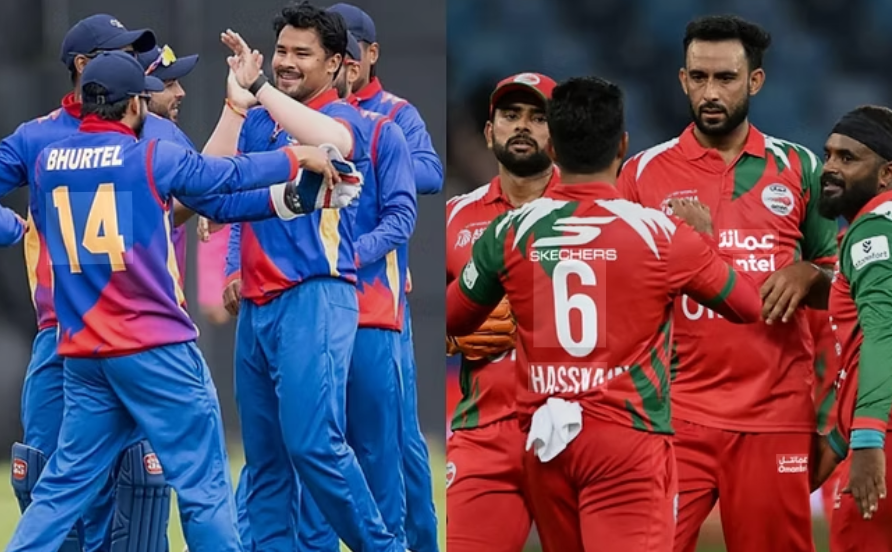
The cricket rivalry between Nepal and Oman has grown into one of the most competitive battles in associate cricket. Both teams have developed strong identities through ICC events and regional tournaments, creating closely fought encounters over the years. Nepal brings passionate batting depth and spin strength, while Oman relies on structured game plans and disciplined execution. Each meeting between them has delivered unpredictable results, shifting momentum and highlighting emerging talent. From early struggles to modern tactical battles, this rivalry reflects growth, pressure, and ambition on both sides, making every match a significant chapter in their evolving cricket journey, together now.
Latest Matches
Date
Format
Tournament
Venue
Winner
Margin
May 5 2026
ODI
ICC CWC League 2
Kirtipur
Nepal
81 runs
Apr 29 2026
ODI
ICC CWC League 2
Kirtipur
Oman
102 runs
Oct 15 2025
T20I
ICC T20 WC Qualifier
Al Amerat
Nepal
38 runs
Oct 2 2024
T20I
Tri Nation Series
King City
Nepal
56 runs
Sep 29 2024
T20I
Tri Nation Series
King City
Nepal
37 runs
Sep 18 2024
ODI
ICC CWC League 2
King City
Oman
1 wicket
Team Statistics Summary
Format
Matches
Nepal Wins
Oman Wins
No Result
Tied
Highest Score
ODI Games
14
6
8
0
0
310
T20I Games
8
5
3
0
1
176
Total Overall
22
11
11
0
1
310
Home Matches
8
4
4
0
1
310
Away Matches
7
3
4
0
0
176
Neutral Venue
7
4
3
0
0
274
Individual Batting Records
Player
Team
Matches
Runs
Highest Score
Average
Strike Rate
Rohit Paudel
Nepal
18
485
86
32.33
81.51
Aqib Ilyas
Oman
14
412
109
34.33
78.47
Jatinder Singh
Oman
16
398
107
26.53
75.12
Aasif Sheikh
Nepal
15
387
94
27.64
79.30
Zeeshan Maqsood
Oman
17
365
60
24.33
82.20
Kushal Bhurtel
Nepal
16
312
56
20.80
95.41
Individual Bowling Records
Player
Team
Matches
Wickets
Best Bowling
Economy
Average
Bilal Khan
Oman
15
28
4 for 47
4.65
21.14
Sandeep Lamichhane
Nepal
11
22
3 for 18
4.10
18.54
Zeeshan Maqsood
Oman
17
19
3 for 33
4.45
25.21
Karan KC
Nepal
14
18
4 for 25
5.12
23.44
Sompal Kami
Nepal
15
16
3 for 35
4.90
28.18
Khawar Ali
Oman
10
13
3 for 48
4.32
24.61
Early Encounters and First Competitive Sparks
The first meetings between Nepal and Oman marked the beginning of a competitive cricket relationship that slowly grew into a respected associate rivalry. In the early phase, both teams were still building their identity in international cricket and learning how to handle pressure in ICC pathway tournaments. Nepal entered these matches with a strong spin attack and passionate batting lineup, while Oman relied heavily on disciplined bowling and structured batting depth. The initial encounters were not just about results but about understanding each other’s style and adapting quickly. Early scorecards showed frequent collapses under pressure, especially when chasing targets above par. However, these games laid the foundation for future intensity, as both sides started to recognize patterns in each other’s gameplay. Over time, the contests became more tactical, with captains experimenting with field placements and batting orders. Fans also began to notice the growing competitiveness, as matches often shifted momentum within a few overs, making this early phase the true origin of a balanced and evolving cricket rivalry.
Match
Year
Winner
Key Performance
ICC Qualifier
2015
Oman
Spin dominance in middle overs
Friendly Series
2016
Nepal
Top order batting recovery
ICC League Match
2017
Oman
Death over bowling control
Tri Series
2018
Nepal
Strong opening partnership
Emerging Associate Cricket Powerhouses in Asia
As both sides continued to develop, their progress in associate cricket became more visible through improved fitness standards, better domestic structures, and increased international exposure. Nepal built its strength around aggressive young batters and a reliable spin unit that often controlled middle overs effectively. On the other hand, Oman focused on disciplined team structure, naturalized experience from different cricket cultures, and a calm approach under pressure. These improvements started reflecting in closer matches where small margins decided outcomes. The batting strike rates increased on both sides, and bowlers began to adapt to defensive field setups and power hitting strategies. This phase also showed a shift in mindset, as both teams started believing they could consistently compete at higher levels rather than just participate. Coaching strategies played a major role, especially in improving death over execution and powerplay scoring. Matches became more intense, and every contest between them started carrying qualification significance, making each game more than just another fixture.
Match
Year
Winner
Key Performance
ICC League
2018
Oman
Controlled chase execution
Asia Qualifier
2019
Nepal
Middle order stability
ICC Series
2019
Oman
Bowling consistency
Tri Nation
2020
Nepal
Improved fielding impact
First High Pressure Clash That Defined Respect
The first truly high-pressure encounter between these two sides changed how both teams viewed each other. It was no longer about experimentation but about execution under pressure. The batting units faced early breakthroughs that exposed technical weaknesses, while bowlers from both sides exploited pitch conditions intelligently. The scorecard reflected a tightly contested game where no team could dominate for long. Nepal’s innings often relied on rebuilding partnerships after early setbacks, while Oman focused on steady run accumulation without taking unnecessary risks. In the second innings, pressure became the defining factor as required run rates fluctuated rapidly, forcing mistakes from set batters. Fielding intensity also increased, with run-outs and diving stops becoming match-changing moments. The emotional intensity of this clash set a new standard for future meetings, as both teams realized that small errors could decide outcomes. From this point onward, every match between them carried a sense of urgency and tactical depth that fans had not seen before in their earlier encounters.
Match
Year
Winner
Key Performance
ICC Qualifier
2021
Oman
Death over bowling pressure
Asia Cup Qualifier
2021
Nepal
Crucial middle order recovery
ICC League
2022
Oman
Tight chase execution
Tri Series
2022
Nepal
Spin control in final overs
Batting Stars Who Changed the Rivalry Dynamic
As the rivalry matured, batting performances became the defining factor in many matches. Nepal developed reliable top order players who could anchor innings while still maintaining a healthy scoring rate. Their ability to build partnerships after early wickets became a key strength. Oman, meanwhile, relied on experienced batters who could rotate strike efficiently and accelerate in the final overs. Several innings from both sides stood out where individual brilliance completely shifted match momentum. In particular, innings built under pressure during chases highlighted the mental strength of batters. The ability to handle spin, especially in middle overs, became a decisive factor in determining match outcomes. Some matches saw explosive starts followed by sudden collapses, while others featured slow rebuilding followed by strong finishes. These contrasting styles made batting duels highly unpredictable. Over time, fans began associating certain players with match-winning moments, making batting performances a central storyline in this evolving cricket rivalry.
Match
Year
Winner
Key Performance
ICC Match
2022
Nepal
Top order century partnership
League Game
2022
Oman
Anchored chase under pressure
Qualifier
2023
Nepal
Fast scoring middle order
Series Match
2023
Oman
Late innings acceleration
Bowling Duels That Controlled Match Outcomes
Bowling performances played an equally important role in shaping outcomes between these two sides. Nepal’s spin attack often dictated terms in middle overs, creating pressure through dot balls and wicket-taking deliveries. Oman countered with a disciplined pace unit capable of maintaining tight lines and forcing batters into mistakes. Many matches were decided during bowling spells where momentum shifted rapidly within a few overs. The ability to defend low totals or restrict high-scoring lineups became a hallmark of this rivalry. In several encounters, bowlers from both sides produced match-defining spells that completely altered the course of the game. Variations in pace, length adjustments, and strategic field placements were frequently used to outsmart opposition batters. As both teams gained experience, bowling strategies became more sophisticated, with captains rotating bowlers strategically based on match situations. This phase highlighted how bowling depth was just as important as batting strength in determining success.
Match
Year
Winner
Key Performance
ICC Fixture
2023
Oman
Powerplay wicket burst
League Game
2023
Nepal
Spin dominance middle overs
Qualifier
2024
Oman
Death over yorker accuracy
Series Match
2024
Nepal
Restrictive economy spell
Asia Cup and ICC Qualifier Clashes Under Pressure
High-stakes tournament matches elevated the rivalry to another level. In qualification scenarios, every run and wicket carried immense value due to net run rate and tournament progression implications. Nepal often relied on aggressive starts to set early momentum, while Oman focused on controlled innings building. These matches were characterized by fluctuating pressure, where momentum changed multiple times within a single innings. Captains played a crucial role in adapting strategies based on conditions and opposition behavior. Scorecards from these matches often reflected tight finishes, with margins of victory being very small. Fielding standards also improved significantly in these games, as both teams understood the importance of saving crucial runs. The psychological pressure of ICC tournaments brought out both brilliance and errors, making these matches some of the most memorable in their rivalry timeline.
Match
Year
Winner
Key Performance
ICC Qualifier
2024
Oman
Net run rate control chase
Asia Cup Qualifier
2024
Nepal
Pressure batting partnership
ICC League
2025
Oman
Tactical bowling rotation
Qualifier Match
2025
Nepal
Death over batting surge
Middle Phase Rivalry Evolution and Tactical Changes
As the rivalry progressed further, both teams showed clear tactical evolution. Batting approaches became more aggressive in powerplays, while middle overs were managed with increased strike rotation. Nepal started focusing on explosive starts to capitalize on field restrictions, whereas Oman improved its finishing ability in tight chases. Bowling units also evolved with better use of slower deliveries, cutters, and spin variations. Captains began analyzing opposition weaknesses more deeply, leading to smarter field placements and bowling changes. Fitness improvements allowed players to maintain intensity throughout full matches, reducing late innings errors. The overall quality of cricket improved significantly, making each encounter more unpredictable and competitive. Fans witnessed matches where momentum swung multiple times, reflecting how closely matched both sides had become in terms of skill and strategy. This phase marked the transition from developing teams to serious competitive units in associate cricket.
Match
Year
Winner
Key Performance
League Game
2025
Nepal
Aggressive powerplay start
ICC Fixture
2025
Oman
Strategic bowling changes
Series Match
2025
Nepal
Strong finishing overs
Qualifier
2026
Oman
Controlled chase execution
Conclusion
The rivalry between Nepal and Oman has matured into a balanced contest shaped by skill, strategy, and determination. Over the years, both sides have exchanged victories in tightly fought matches where small moments decided outcomes. Nepal’s spin strength and aggressive batting approach continue to challenge Oman’s structured and disciplined game style. Oman’s ability to handle pressure situations has often given them an edge in crucial encounters. As both teams continue to evolve, their matches remain unpredictable and highly competitive. This rivalry now stands as a symbol of growth in associate cricket, promising even more exciting chapters in the future ahead.